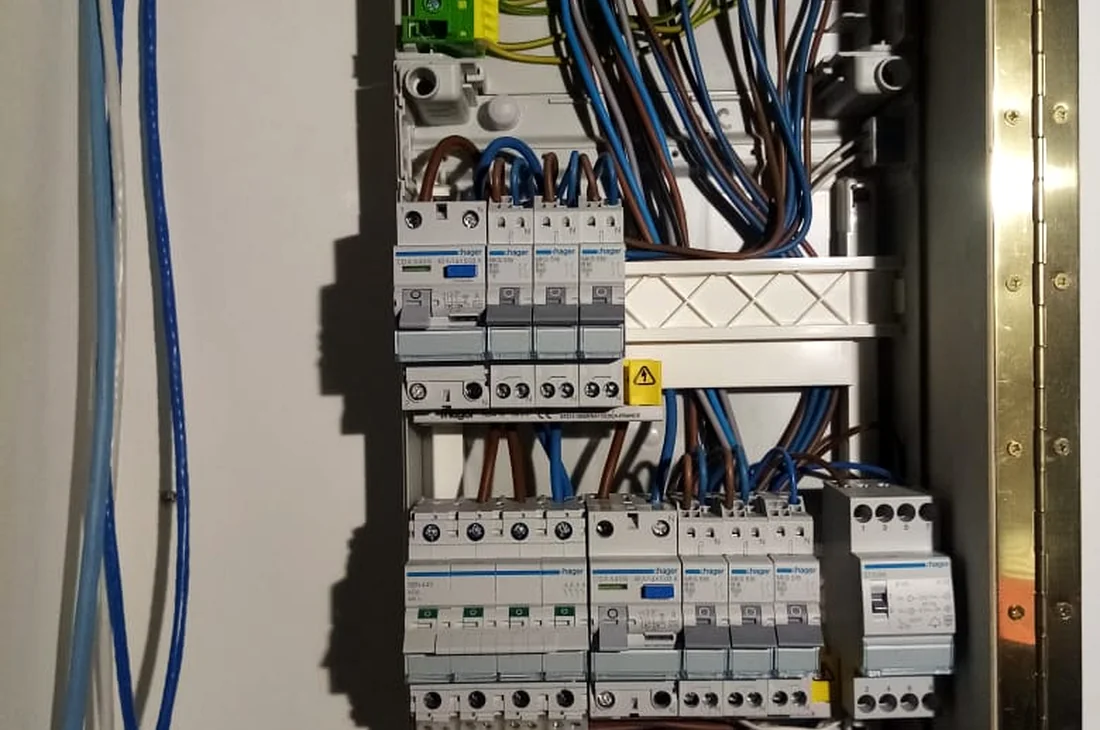
Too few circuits means overloading and breakers that trip. So how many does a home actually need? Here are the guidelines we work with.
What is a circuit, exactly?
A circuit (groep) is a separately protected power line in your fuse box. Each feeds part of your home and has its own breaker. Spreading consumption across several circuits avoids overloading any one of them.
Guideline: how many?
As a rule of thumb an average Dutch home needs at least six to eight circuits, with separate ones for heavy consumers: washing machine, dryer, oven and hob. A larger home, or one with an EV charger, heat pump or solar panels, needs more.
When do you need an extra circuit?
As soon as you add a heavy or critical consumer: an induction hob, EV charger, air conditioning, heat pump, or heavy tools in a workshop. It is also the fix when existing circuits keep tripping under load.
Choosing for the future
When you have a new fuse box installed, always leave a few spare circuits free. You can then expand later without reworking the whole box — much cheaper than a second replacement.
Practical information from Oleksandr Volkov, electrical engineer and electrician with 25+ years of experience.